
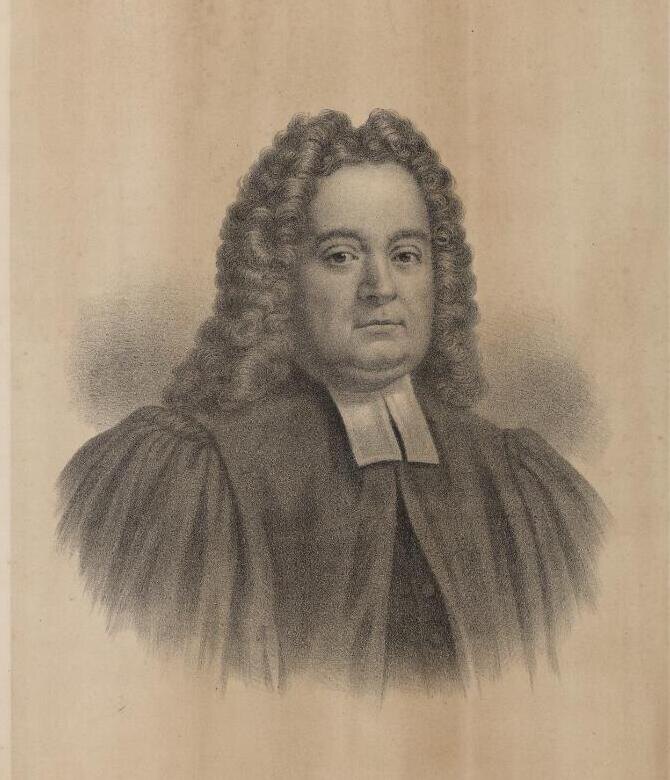
Matthew Henry is remembered so readily as “the commentator” that it is easy to forget the pastor behind the pages. His famous Exposition of the Old and New Testaments did not grow out of a scholar’s retreat from ordinary church life. It came from years of preaching, catechizing, visiting, and applying Scripture to people who had to worship, work, suffer, raise families, and die well.
That setting explains why Henry’s writing remains distinctive. He can attend closely to the words and argument of a biblical passage, then turn without strain to the conscience, the household, the church, or the duties of the day. For him, interpretation was never complete until truth had found its way into life.
A Son of English Nonconformity
Henry was born at Broad Oak in Flintshire on October 18, 1662. His father, Philip Henry, had been removed from his Church of England ministry under the Act of Uniformity less than two months earlier. Matthew therefore entered a home in which religious conviction carried a visible cost. The family’s Nonconformity was not an abstract label but the atmosphere in which he learned Scripture, worship, and pastoral seriousness.
Much of his early education came from his father. He later studied at the dissenting academy of Thomas Doolittle, beginning in 1680. In 1685 he entered Gray’s Inn, one of London’s institutions for legal training. Yet law did not become his vocation. Henry continued preparing for ministry, joining disciplined study with the habits of devotion that would characterize his later work.
Twenty-Five Years in Chester
Henry was privately ordained in London in 1687 and began serving a Presbyterian congregation in Chester that year. He remained for twenty-five years. The length of that pastorate matters: his mature books emerged from sustained care for a particular people rather than a succession of brief posts.
His work reached beyond regular services. Biographical accounts record that he held services in villages around Chester and preached to prisoners in Chester Castle. These activities fit the practical breadth of his books. Henry addressed hearers in varied circumstances, and his applications repeatedly ask what faithfulness looks like where a reader actually stands.
In 1712 he accepted a call to Mare Street in Hackney. The move placed him near London and gave him wider opportunities to preach and teach, but it did not change the fundamental shape of his ministry: opening Scripture and pressing it home with pastoral directness.
The Commentary—and What Henry Completed
Henry began the work commonly called his Bible commentary in 1704. Its full title, An Exposition of the Old and New Testaments, accurately describes its purpose. It is exposition rather than a modern technical commentary: Henry follows the biblical text while gathering doctrinal, devotional, and practical observations from it.
A careful reader should know where Henry’s own completed work ends. Before his death he finished Genesis through Acts. Fellow ministers later prepared the treatment of Romans through Revelation, drawing principally on his notes and other writings. The completed set bears his name and carries forward his method, but that editorial history guards against attributing every sentence of its final volumes directly to him.
The enduring attraction of the Exposition is not merely its size. Henry writes as one persuaded that every part of Scripture belongs to the church and bears upon Christian character. He notices family relationships, public responsibilities, private motives, prayer, providence, temptation, and hope. Readers find not a replacement for close study, but a trusted companion who keeps asking, “How should this truth shape us?”
A Writer of Practical Divinity
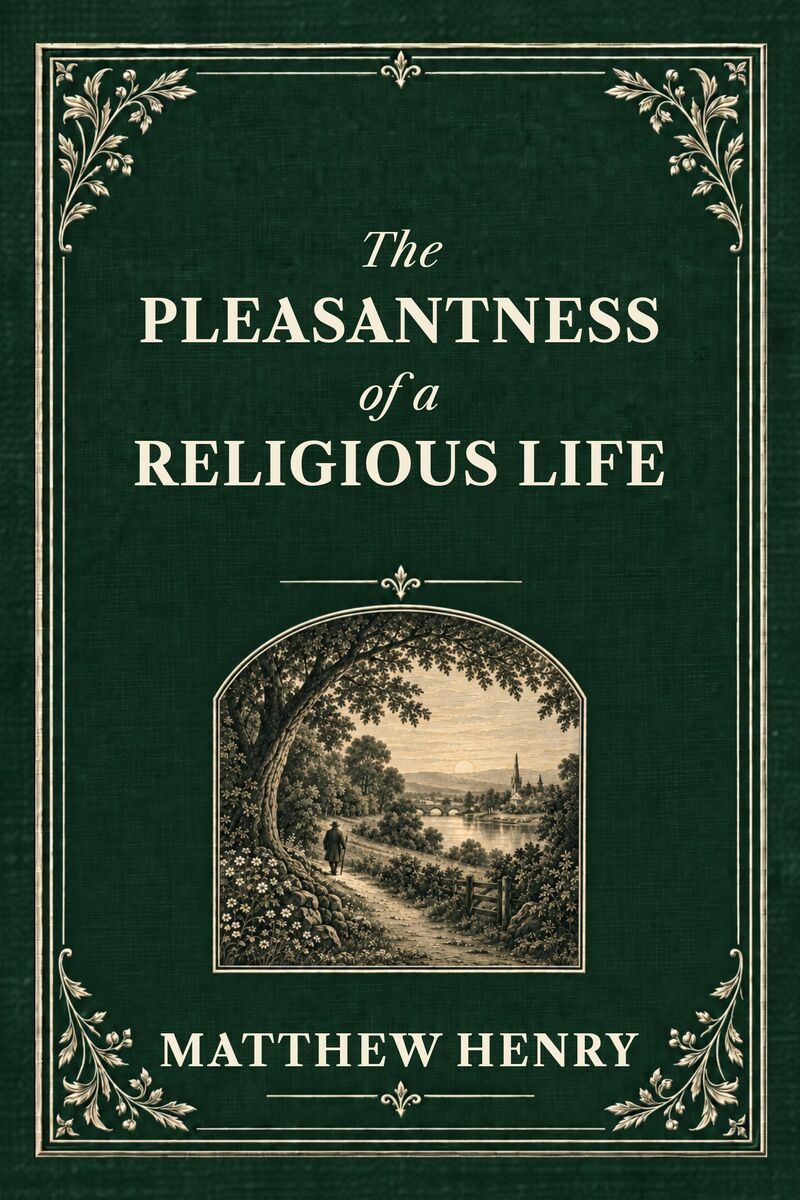
Henry’s shorter works let that pastoral method concentrate on one theme. A Method for Prayer arranges the language of Scripture for prayer. The Communicant’s Companion prepares believers for the Lord’s Supper. The Pleasantness of a Religious Life takes Proverbs 3:17—“Her ways are ways of pleasantness, and all her paths are peace”—and considers whether holiness and happiness must be rivals.
That last book grew from six sermons preached in the ordinary course of Henry’s ministry. In his preface he says friends encouraged publication, and that he prepared it after completing the fifth volume of his Exposition and before beginning the sixth. This is Henry in miniature: a biblical text opened carefully, objections taken seriously, and doctrine directed toward worship, desire, duty, sorrow, and relationships.
His Final Journey and Enduring Usefulness
Henry died at Nantwich on June 22, 1714, while returning toward London after visiting Cheshire. It is safest not to turn the proximity of his death and the book’s printing into a story the surviving evidence cannot prove. What can be said is that the first edition of The Pleasantness of a Religious Life bears the date 1714, while a 1715 second edition identifies him as deceased.
Henry’s usefulness lies in the union he practiced so consistently: explanation and application, doctrine and devotion, truth and conduct. He helps readers resist two errors at once—the notion that warm devotion needs little thought, and the notion that sound interpretation can remain untouched by love and obedience. His best pages invite us not simply to admire biblical wisdom, but to walk in its ways.
Sources and Further Reading
- Oxford Dictionary of National Biography, “Henry, Matthew (1662–1714), Presbyterian minister”.
- Banner of Truth, “Matthew Henry”.
- Encyclopædia Britannica, 11th edition, “Henry, Matthew”.
- Matthew Henry, “To the Reader,” in The Pleasantness of a Religious Life.
Read Matthew Henry on Joy and Holiness
The Pleasantness of a Religious Life explores the peace found in wisdom’s ways without ignoring self-denial, affliction, or spiritual conflict.
Explore the book’s central argument →
View book details